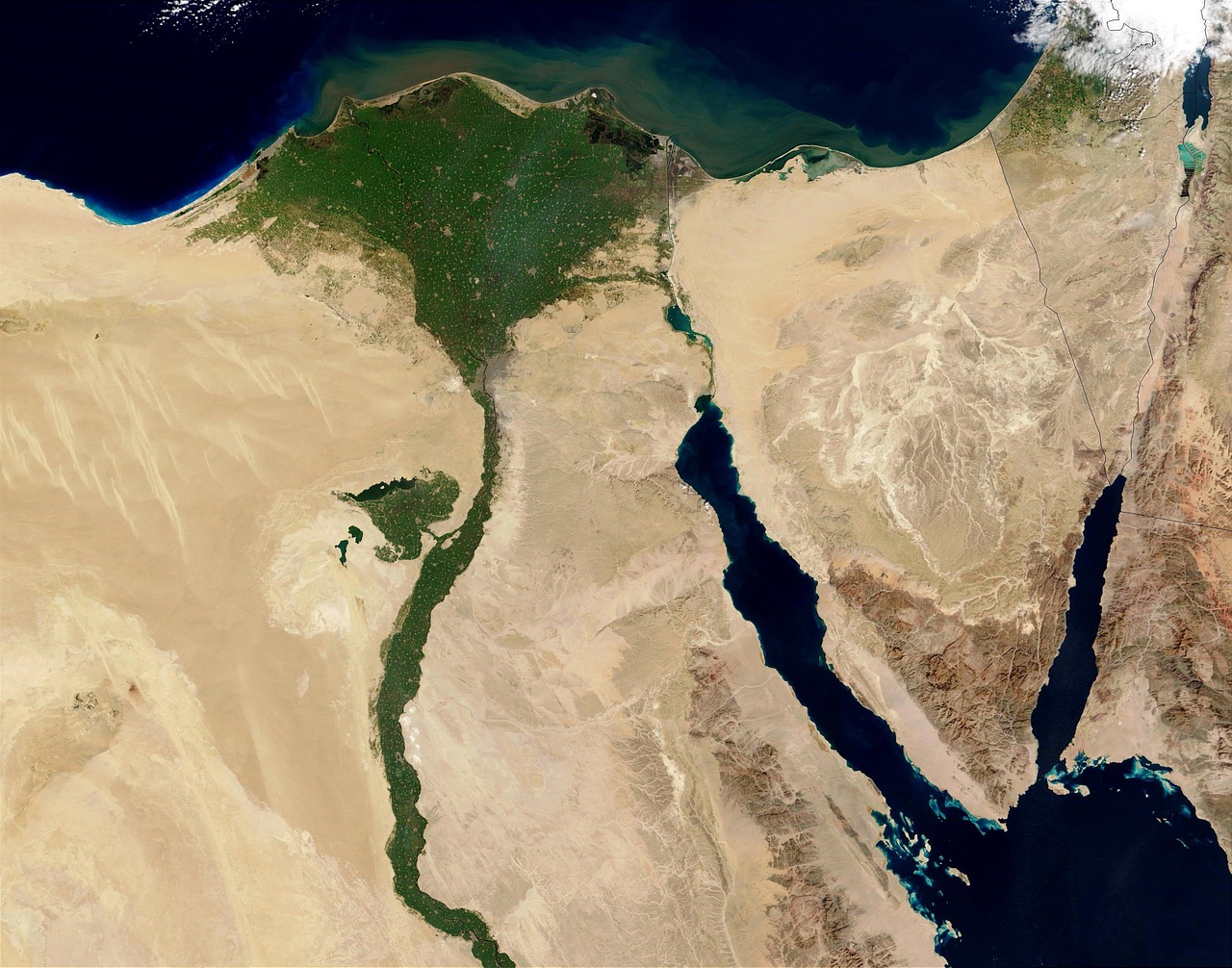

When people ask, “what is the longest river in Africa,” they are usually choosing between two giants that shape the continent’s geography, history, and daily life. The most widely accepted answer is the Nile River, which is commonly cited at about 6,650 kilometers (4,130 miles), making it Africa’s longest and one of the longest rivers on Earth.
That said, measuring a river’s “true” length is more complex than it sounds, and the Congo River (also spelled Zaire in older sources) regularly enters the conversation because it is Africa’s deepest river and carries enormous volumes of water. Understanding the debate means looking at how river length is calculated, where each river begins and ends, and what each one contributes to the people and landscapes it crosses.
The Nile: Africa’s longest river by most standard measurements
The Nile is the classic answer to what is the longest river in Africa because its main course—running generally northward to the Mediterranean—adds up to an often-cited length of roughly 6,650 km. It flows through or along the borders of eleven modern countries in its broader basin, and it has been central to settlement patterns for thousands of years, especially in Sudan and Egypt where the river’s narrow green corridor contrasts sharply with surrounding deserts.
One reason the Nile’s length is so high is that it is a system of major tributaries and headwaters rather than a single spring-fed stream. The two most famous branches are the White Nile, which provides more consistent year-round flow, and the Blue Nile, which contributes dramatic seasonal floods and much of the silt historically deposited in the Nile Valley. These branches converge at Khartoum, Sudan, after which the river continues north through arid landscapes until it fans into the Nile Delta.
At the downstream end, the Nile Delta is one of the world’s most recognizable river deltas, a fertile triangle where the river slows, splits into distributaries, and meets the Mediterranean. The delta’s agricultural productivity and dense population illustrate why the Nile is often described as the lifeline of northeastern Africa: its waters support irrigation, drinking supply, industry, transportation, and hydropower, even as demand and climatic variability create ongoing pressure on the system.
Why the “longest river” question can be controversial
River length is not measured like a straight line on a map; it depends on which channel is considered the main stem, how tightly the river’s bends are traced, and which headwater tributary is chosen as the farthest source. In wet regions, headwater streams can shift over time, and in delta regions, distributaries can lengthen, shorten, or be redirected by sedimentation and human engineering. That is why different atlases and scientific teams sometimes report slightly different totals for the same river.
For the Nile, debates often revolve around identifying the most distant source of the White Nile and how to treat lake and wetland passages in the upper basin. For the Congo, uncertainties can arise from complex tributary networks and how to define the upstream start of the main channel. In practice, most educational references keep the Nile in first place for African river length, but the margin is not always presented as absolute because measurement methods differ.
It also helps to separate “longest” from other superlatives. A river can be shorter but carry more water, be deeper, drain a larger basin, or have greater hydropower potential. These distinctions matter because they shape navigation, ecology, flood risk, and water politics. So even if the Nile remains the best answer to what is the longest river in Africa, the Congo’s characteristics explain why it is frequently mentioned in the same breath.
The Congo River: not the longest, but a hydrologic powerhouse
The Congo River is typically placed second or close behind in Africa by length (commonly reported around 4,700 km, depending on definitions), but it dominates the continent in other ways. It is the second-largest river in the world by discharge after the Amazon, meaning it carries an immense volume of water to the Atlantic Ocean. This is a function of its huge drainage basin and its location straddling the equatorial zone, where rainfall is high and more evenly distributed across the year.
The Congo is also famous for depth: in places it plunges well beyond 200 meters, and it is often described as the world’s deepest river. That depth is not just a curiosity—it affects river velocity, sediment transport, and the kinds of aquatic habitats that can exist. It also helps explain why certain stretches can be dangerous for navigation, with powerful rapids and complex currents, especially toward the lower river where the channel drops rapidly on its approach to the ocean.
In real-world terms, the Congo’s “powerhouse” nature shows up in energy and ecology. The river and its tributaries support vast rainforest ecosystems in the Congo Basin, one of Earth’s most important carbon stores and biodiversity reservoirs. At the same time, the river’s steep gradients in some sections create major hydropower opportunities, which is why projects in the lower Congo have long been discussed as potential large-scale electricity sources—though such projects raise serious environmental and social questions about fisheries, river-dependent communities, and forest impacts.
Conclusion
If you’re asking what is the longest river in Africa, the Nile is the most widely accepted answer at about 6,650 km, while the Congo—shorter in length—stands out for extraordinary depth and discharge, showing that “biggest” rivers can be defined in more than one way.
FAQ
Q: What is the longest river in Africa?
The Nile is most commonly cited as Africa’s longest river, at roughly 6,650 kilometers (4,130 miles), though exact totals vary slightly by measurement method and defined headwaters.
Q: Why do some sources debate the Nile’s exact length?
River length depends on how the main channel is traced, which tributary is treated as the farthest source, and how wetlands, lakes, and shifting channels are incorporated into the measurement.
Q: If the Congo isn’t the longest, why is it considered so important?
The Congo is among the world’s most powerful rivers by water volume, is often cited as the deepest river on Earth, and supports the ecology and economies of the Congo Basin, making it central to biodiversity, transport, and energy discussions.