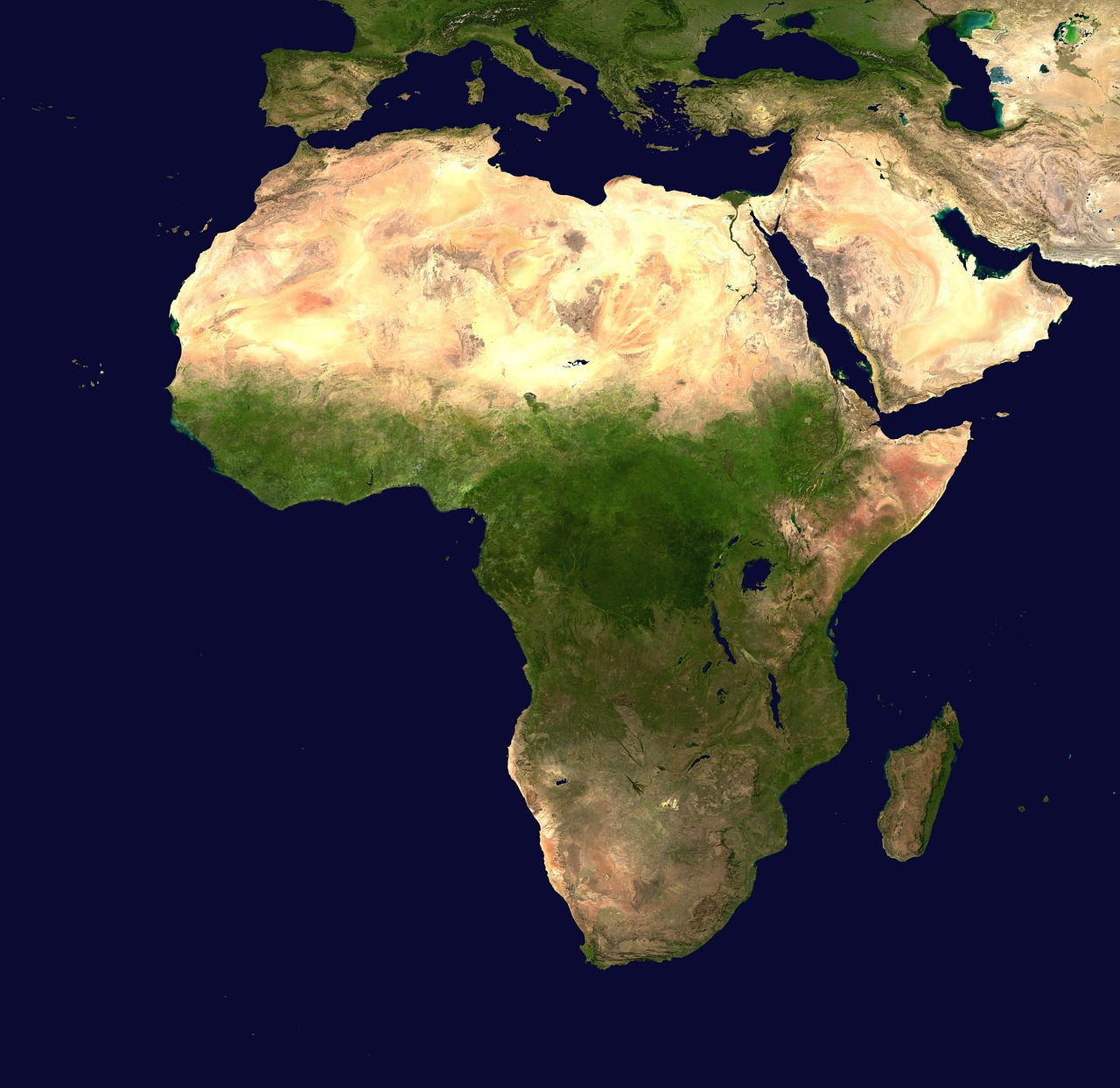

People often ask, “is africa a country?” because maps, news headlines, and travel talk can blur the difference between a continent and a nation. The confusion is common, but the answer is straightforward.
No Africa is not a country. Africa is a continent made up of 54 internationally recognized countries, plus several territories and regions with different political statuses.
Africa is a continent, not a single nation
A continent is a large landmass made up of multiple countries and cultures; a country is a political unit with its own government and borders. Africa is one of Earth’s seven continents, covering about 30 million square kilometers, which is roughly one-fifth of the world’s land area.
As a continent, Africa includes an extraordinary range of environments—from the Sahara Desert in the north to equatorial rainforests in Central Africa to Mediterranean coasts in the far north and south. That physical diversity mirrors its human diversity: thousands of ethnic groups and a vast number of languages are spoken across the continent.
When someone asks “is africa a country,” it helps to compare it to Europe or Asia. Few people would call Europe a country, even though it sometimes acts collectively in areas like trade. Africa likewise has regional and continental organizations, but it is not governed as one single state.
How many countries are in Africa, and what makes them different?
Africa has 54 countries that are widely recognized as sovereign states. These range from very large nations like Algeria and the Democratic Republic of the Congo to smaller ones like The Gambia and Eswatini, each with its own capital, constitution, and national institutions.
The differences between African countries are concrete and measurable. Population sizes vary from nations with well over 100 million people to island states with under a million. Economies also differ widely: some rely heavily on oil and gas, others on agriculture, manufacturing, tourism, or services. Currency systems vary too—some countries use the CFA franc in West and Central Africa, while others have independent currencies like the Nigerian naira or South African rand.
Political systems are not uniform. Africa includes republics, constitutional monarchies, and countries with different mixes of presidential and parliamentary governance. Treating Africa as one country erases these distinctions and can lead to inaccurate assumptions about law, travel requirements, and daily life from one border to the next.
Why the confusion persists, and why accuracy matters
The idea that Africa is a single place often comes from shorthand in media and everyday conversation. Headlines may say “in Africa” when they mean a specific country or even a particular city. Because Africa is frequently discussed in terms of broad themes—development, climate, migration, conservation—people can accidentally generalize the entire continent.
History also plays a role. Many modern borders were shaped during European colonial rule and later solidified through independence movements in the 20th century. Understanding that context explains why countries can sit side by side with different official languages, legal traditions, and administrative systems—such as English common-law influences in some places and French civil-law influences in others.
Precision matters for respect and for facts. Saying “Africa” when you mean “Kenya,” “Egypt,” or “Ghana” can distort realities: policies, cultures, and even time zones differ. For travelers, accuracy affects visas, health requirements, and safety guidance. For business and education, it affects regulations, market conditions, and the ability to learn from local expertise rather than stereotypes.
Conclusion
If you’re wondering “is africa a country,” the clear answer is no: Africa is a continent made up of 54 countries, each with its own government, borders, and distinct cultures.